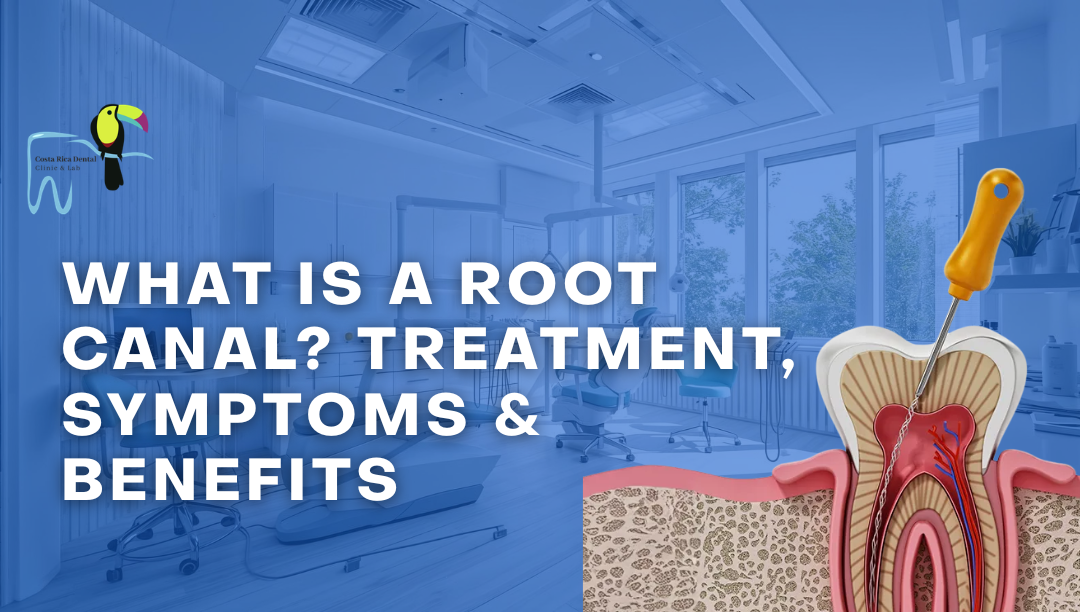
What Is a Root Canal Treatment?
A root canal treatment, also known as endodontic treatment or root canal therapy, is used to treat infection or irreversible inflammation inside a tooth.
Inside each natural tooth is a soft tissue called the dental pulp. It contains nerves, blood vessels, and connective tissue. When the pulp becomes severely inflamed or infected, it may no longer be able to heal on its own.
During a root canal procedure, the affected pulp is removed. The internal canals are then cleaned, disinfected, shaped, filled, and sealed. The objective is to remove the source of infection while preserving as much of the natural tooth as possible.

Why Would You Need a Root Canal?
A dentist may recommend root canal treatment when the pulp has become irreversibly damaged, inflamed, or infected.
- Deep tooth decay that reaches the pulp
- A cracked, chipped, or fractured tooth
- Trauma or injury to the tooth
- Repeated dental procedures on the same tooth
- Infection inside or around the tooth
What Are the Signs You May Need a Root Canal?
Symptoms vary, but possible warning signs include:
- Severe or persistent tooth pain
- Prolonged sensitivity to hot or cold
- Pain when biting or chewing
- Swelling or tenderness near the tooth
- A pimple-like bump on the gum
- Tooth discoloration or darkening
- Deep decay or visible damage
Some damaged or infected teeth cause very few noticeable symptoms. Routine dental examinations can help identify problems before they become more serious.


What Happens During a Root Canal Procedure?
- Examination and diagnosis The dentist evaluates your symptoms and the tooth. X-rays may be used to examine the roots and surrounding bone.
- Local anesthesia The area is numbed to help keep you comfortable during treatment.
- Removal of the affected pulp A small opening is created to access the pulp chamber and root canals.
- Cleaning and disinfection The canals are cleaned, shaped, and disinfected to reduce bacteria.
- Filling and sealing The cleaned canals are filled and sealed with materials used for endodontic treatment.
- Restoring the tooth A filling, crown, or another restoration may be recommended to protect the tooth and restore function.
Does a Root Canal Hurt?
Root canal treatment is generally performed with local anesthesia, which helps minimize discomfort during the procedure. The pain many patients associate with root canals is often caused by the infection or inflammation that exists before treatment.
Some temporary tenderness may occur afterward. Contact your dental provider if you experience severe pain, significant swelling, or symptoms that become worse.
What Are the Benefits of Root Canal Treatment?
- Helps preserve the natural tooth
- Removes infected or inflamed pulp tissue
- Addresses the source of infection-related pain
- Helps prevent the infection from progressing
- Restores function with the appropriate final restoration
- May help avoid tooth extraction
Root Canal vs. Tooth Extraction: Which Is Better?
When a damaged or infected tooth can be successfully treated and restored, a root canal may allow you to keep your natural tooth.
Extraction may be necessary when a tooth is severely fractured, has insufficient healthy structure, has advanced periodontal problems, or cannot be predictably restored. If extraction is required, replacement options such as a dental implant or dental bridge may be considered.
Do You Need a Crown After a Root Canal?
Not every root canal-treated tooth requires the same type of restoration. Molars and premolars commonly experience greater chewing forces and may benefit from a dental crown or another protective restoration.
Your dentist will evaluate the tooth's location, remaining structure, and functional needs before recommending the final restoration.
How Long Does a Root Canal-Treated Tooth Last?
A properly treated and restored tooth can remain functional for many years. Its longevity depends on factors such as:
- The condition of the tooth before treatment
- The quality of the root canal procedure
- The amount of healthy tooth structure remaining
- The type and quality of the final restoration
- Oral hygiene and regular dental checkups
- Teeth grinding, clenching, and overall oral health
How Much Does Dental Treatment Cost in Costa Rica?
Costs vary depending on the tooth, the complexity of the root canal, and whether an additional restoration such as a crown is needed.
Review Treatment Pricing
Visit our Costa Rica dental prices page for general information. A personalized evaluation is required to confirm the treatment plan and final cost.
Root Canal Treatment at Costa Rica Dental Clinic & Lab
Our team evaluates each patient's needs, explains the available treatment options, and determines whether endodontic treatment may help preserve the natural tooth.
Patients considering care in Costa Rica can also read our patient testimonials to learn about other patients' experiences.
Frequently Asked Questions About Root Canal Treatment
What is another name for a root canal?
A root canal procedure is also called root canal treatment, root canal therapy, or endodontic treatment.
How do I know if I need a root canal?
Persistent pain, prolonged temperature sensitivity, pain when biting, swelling, and deep decay can be warning signs. A dentist must evaluate the tooth to confirm the diagnosis.
Can a root canal save an infected tooth?
In many cases, it can help preserve the tooth by removing infected or inflamed pulp and sealing the root canal system.
Is a crown necessary after treatment?
It depends on the tooth and how much healthy structure remains. Back teeth commonly require additional protection.
How long does treatment take?
Treatment time varies according to the tooth, root anatomy, and extent of infection. Some cases require more than one visit.
Are You Experiencing Tooth Pain?
Request a dental evaluation to identify the cause of your symptoms and learn whether root canal treatment may be appropriate for your tooth.
Contact Costa Rica Dental Clinic & LabThis article is for general educational purposes and does not replace a clinical examination, diagnosis, or personalized treatment recommendation.